What do I want in an EQ (and some tricks!)
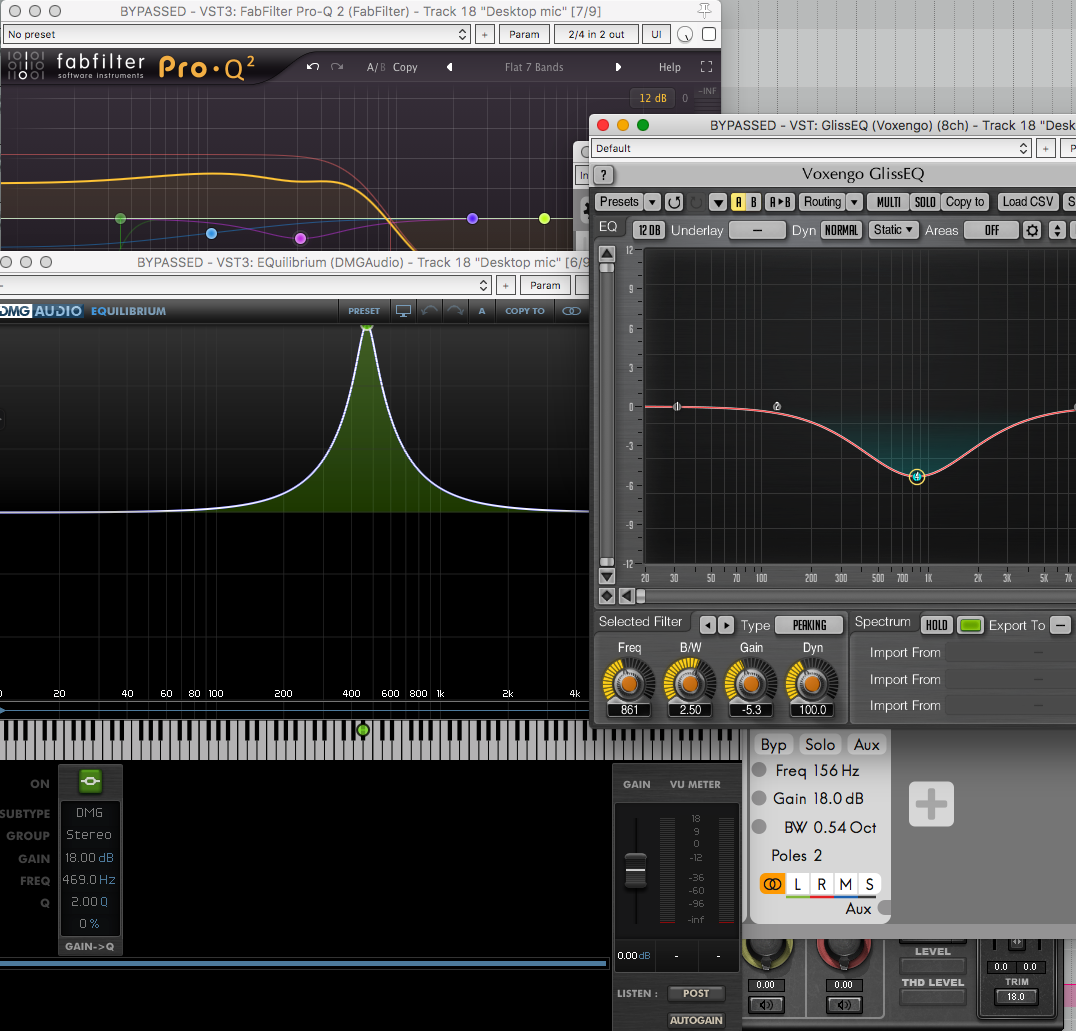
While doing my 30 days without Fabfilter I've realized just how great of an EQ that Fabfilter Pro-Q 2 really is.
I haven't yet found anything that does everything that it does, and does it as well. Apqualizr 2 is an excellent alternative with its own unique strengths, but for every feature it has that Pro-Q 2 does... Pro-Q 2 has an equally valuable feature that Apqualizr is missing.
There's many alternatives. Rather than go through the products themselves, I thought I'd take some time to explain exactly what I am looking for in an EQ at a high-level. I'm ignoring some more esoteric things and sticking largely to things that impact my workflow directly.
Adam A7 switch and fuse replacement
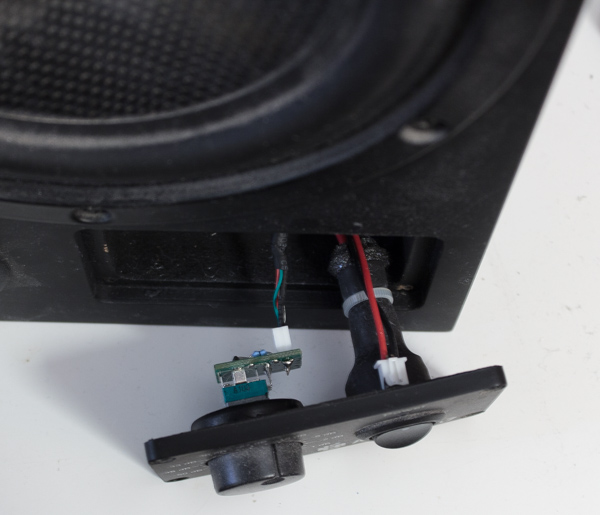
I love my Adam A7 monitors, but they have a known issue with the power switches 'locking' in the on or off position. This happened to me and the fuse also blew. I know this is a simple repair, but I thought I'd browse the web and see if anyone has explained how to do it. I found nothing except some somewhat poor videos on the topic.
So I'm going to walk you through the process step-by-step.
Cleaning Moongels or nipple covers, and alternatives (to the moongels)
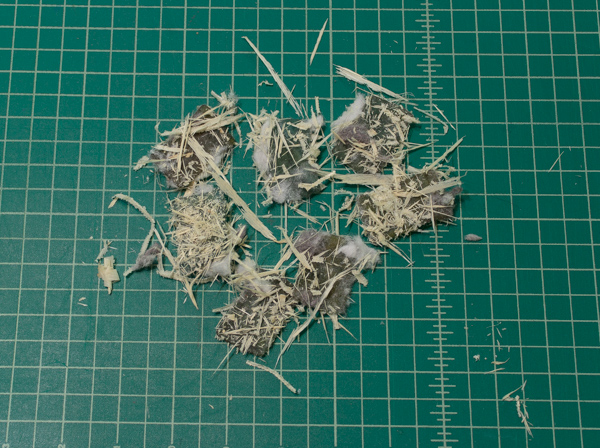
Moongels are awesome products for damping the resonant ringing on drums. The downside is that they are surprisingly expensive (about $2usd each pad) and drums are a dirty environment. The stickiness of them deteriorates over time and they lose their usefulness.
Recently I was cleaning my moongels, which I've been using for about 16 years, and I thought, "I wonder how other people do this?". It turns out that I could find no information on that. Since I think 16 years is a pretty good run with the same set of moongels, perhaps my method is sufficient.
So in this post I'm going to help you find alternatives to Moongels and show you how to clean moongels to a like-new state so that they can be re-used time and time again.
p.s. This whole process works great on polyurethane and silocone Nipple Covers. The sort of thing women use for modesty or anyone uses to avoid chaffing. Just substitute 'moongel' for 'nipple cover' and you're in business. It works great on both.
Question and Answer with Fabien Schivre from Tokyo Dawn
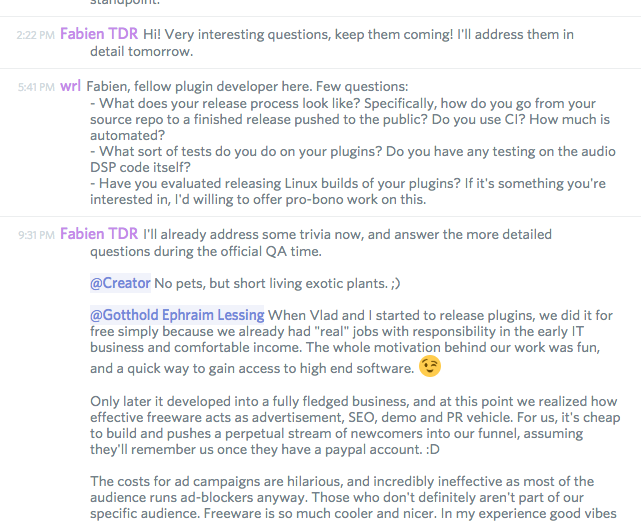
Recently on the EDM Production discord that I help administrate, I held a Q&A with Fabien Schivre from Tokyo Dawn. Specifically we discussed Tokyo Dawn Labs.
Click through for the whole Q&A as I've transcribed it.
30 Days without Fabfilter products
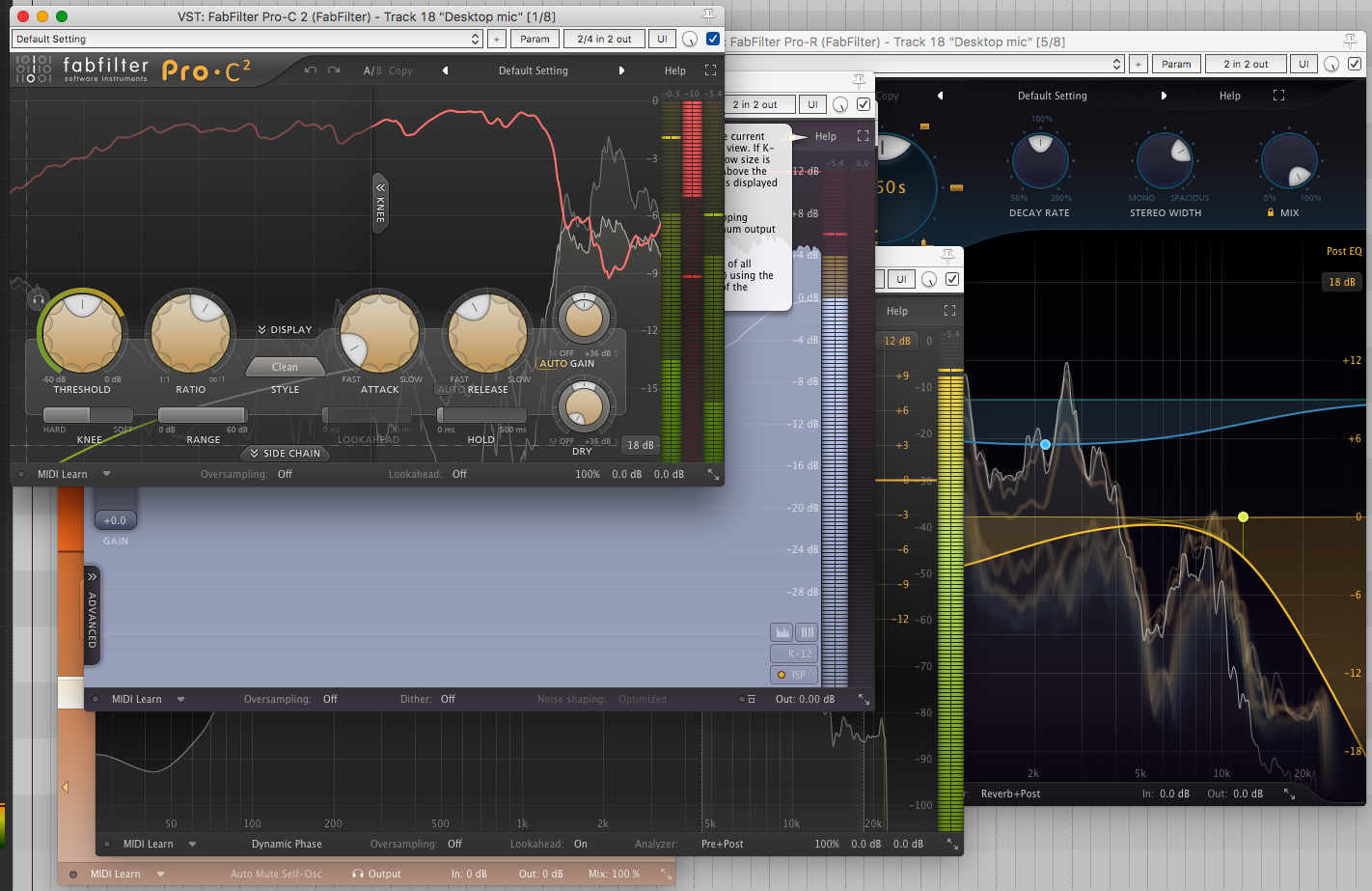
Fabfilter makes amazing products with amazing GUIs. I think every modern music producer or engineer knows this by now.
I have found myself to being too reliant on their products though, so for my next 30 days I'm going to not use any Fabfilter products. When I'm done I'll write a post explaining why I went back to Fabfilter or why I fell in love with something else.
Currently I have some ideas of what I will replace things with, but that will grow. Read more to find out my plans, and comment if you have any awesome suggestions!
Check out the conclusion here after reading this post!
Gainstaging for the modern musician
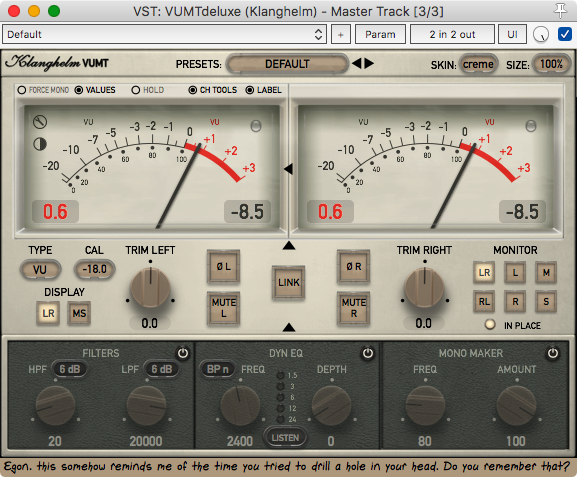
Gain staging. It's a popular phrase now. It was a popular phrase before, but it is now too. There was a short period in the late 80s, 90s and early 00's where, as digital tookover, people forgot it was a thing.
Now we have a whole generation of musically-inclined people that are learning to work entirely digitally, and the necessity of gain staging has slipped by their grasp. It used to be an obvious skill, but now the benefits are a matter of workflow rather than a matter of basic operation.
I get asked about gain staging all the time, and while I generally try to avoid writing about things that are already explained elsewhere, I am going to tackle this one. Why? Because there's one aspect of gain staging that matters to everyone, and almost nobody discusses it.
CONTROL CONTROL CONTROL CONTROL CONTROL CONTROL CONTROL
30 Days with Ardour, again. Version 5.12
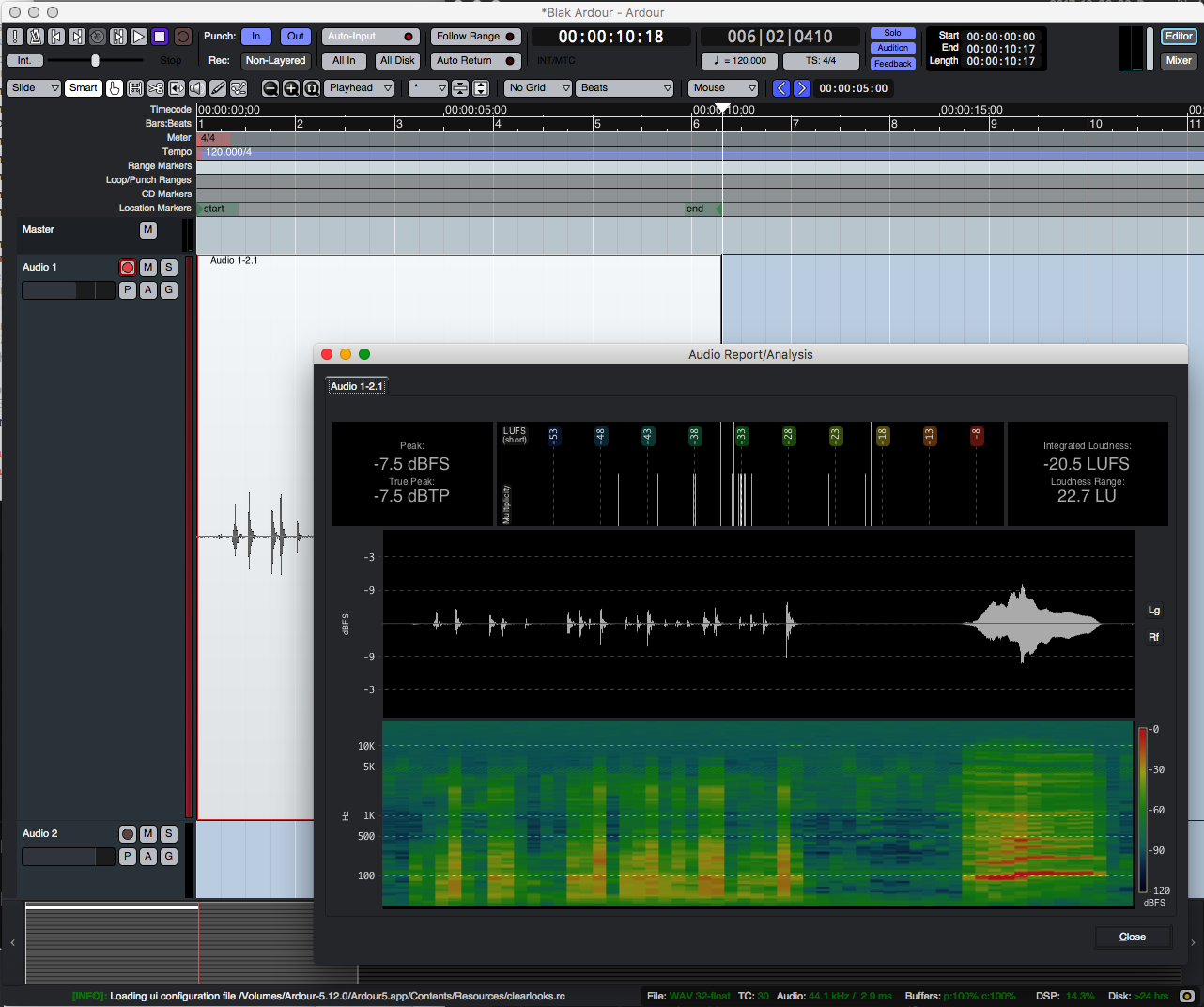
If you follow this blog then you'd know that I've been reviewing mixbus for "30 days" (more like 2.5 months).
You may also know that Mixbus is based upon Ardour, an open source DAW. I previously started a review with Ardour, and stopped due to some issues that made it not possible for me to work efficiently.
Clearly, as I've been using Mixbus 4.1/4.2, Ardour is up to the task of being used and I have been using it. According to my time sink logs I've spent about 60 hours in Ardour working on a project, and looking at the differences between the current version 5.12.
So I'm going to take a moment and give a very short review of Ardour and explain some differences from the Mixbus review I did. I won't be covering all of the differences between Mixbus and Ardour, but I will cover what I feel is fairly important.
First check over the other posts I've written about Mixbus and Ardour.
Harrison Mixbus Conclusion
Here it is. After a number of posts going over some of the unique things about Mixbus, the final post in what was supposed to be a 30 day review.
First check over the other posts I've written and then after the break I'll give a summary of my feelings about Mixbus.
- Cool things Part 1
- Cool things Part 2
- Cool things Part 3
- Cool things Part 4
- Mixbus: The mixer
- Mixbus EQ Revisited
- Review of Mixbus effects
- Review of Mixbus instruments and MIDI plugins
- Mixbus MIDI
- Mixbus Audio editing
Warning: No fancy pictures, just text today!
Mixbus Audio Editing
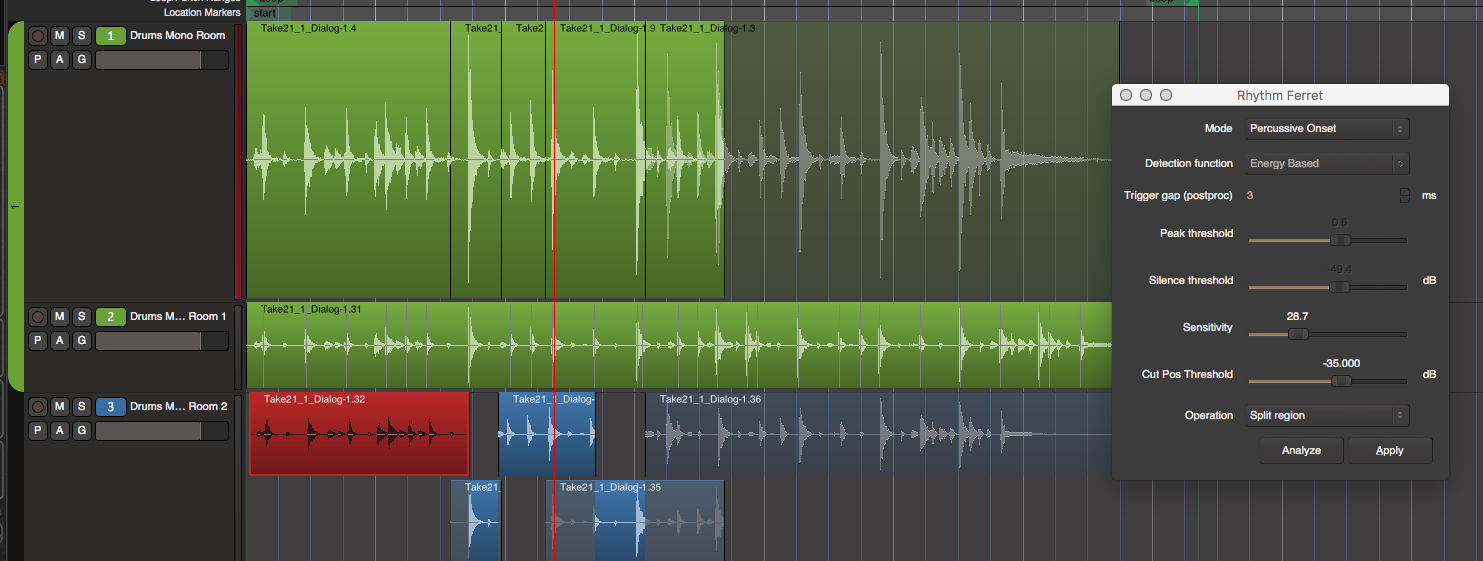
In this penultimate post regarding Mixbus, I'm going to cover some of the more useful or unique features of Audio editing.
Mixbus covers most of the basic editing functions that you'd expect in a DAW. Here I'm going to cover the more useful or unusual features.
Mixbus MIDI Editing
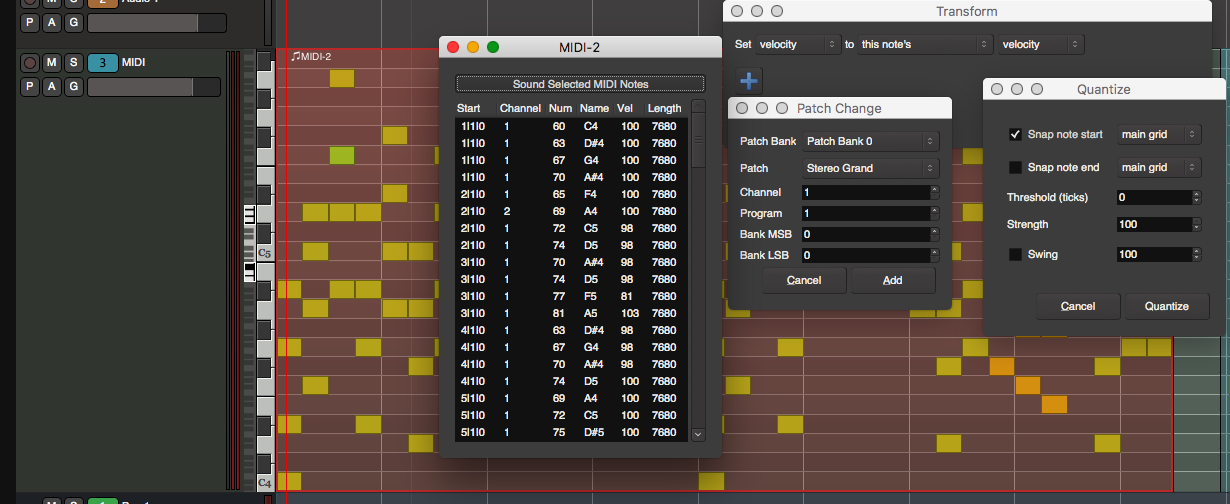
In this third-to-last post of the mixbus review, I'm covering the MIDI editing capabilities.
I will say that I am not primarily a MIDI-based musician. I do work with MIDI and softsynths in my freetime, however my knowledge of the needs of a professional composer are not personally acquired.
Let's get on to it.
NOTE THAT THIS REVIEW IS FOR VERSION 4.2
Review of Mixbus instrument and MIDI plugins
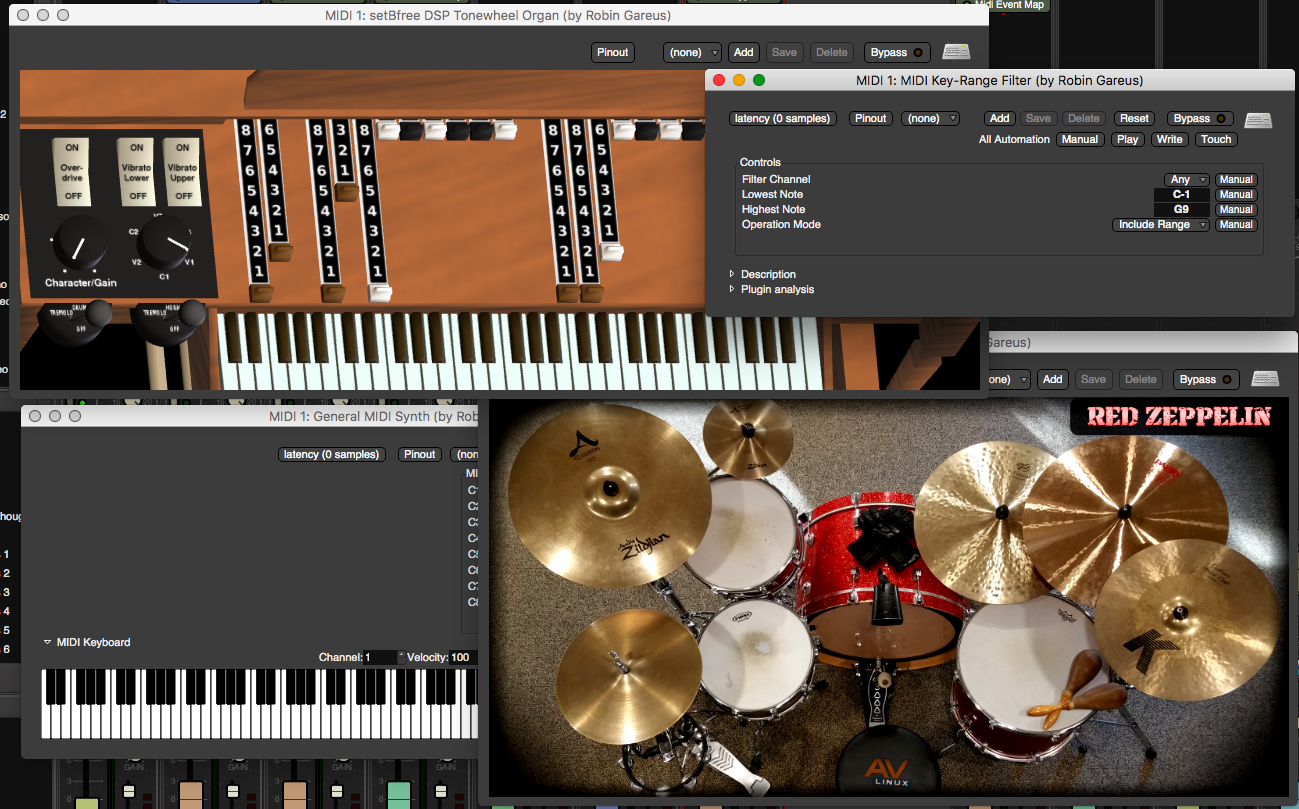
In this post I'll be covering the instruments and midi effects included with Mixbus. The selection of instruments is rather limited, but there is quite some depth to the realtime midi manipulation. Let's get started.
Spoiler - Overall rating Instruments:
Spoiler - Overall rating MIDI Plugins:
Review of Mixbus Effect Plugins
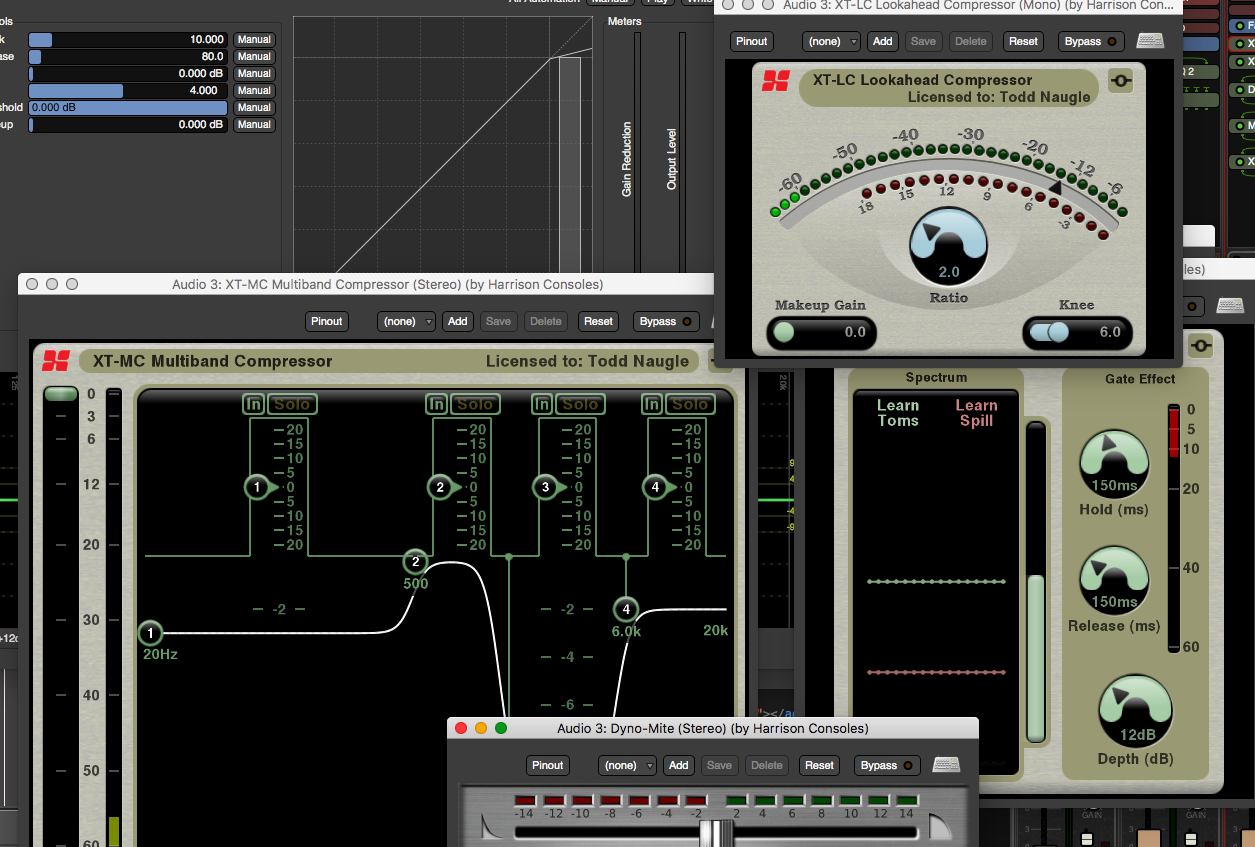
Here's the part where I go a ridiculous amount of work trying and testing plugins. What follows is a short review of every effect plug-in included with Mixbus and the commercially available plug-ins from Harrison and the included x42 plugins that are installed with Mixbus.
THIS REVIEW DOES NOT CONSIDER THE MIXBUS MIXER I covered that elsewhere. Mixbus comes with quite a few things outside of the plugins, so be aware of that.
Spoiler - Overall rating Included Free:
Spoiler - Overall rating Paid Harrison:
Spoiler - Overall rating Paid x42:
Harrison Mixbus EQ Revisited, or how and why Digital EQs sound different
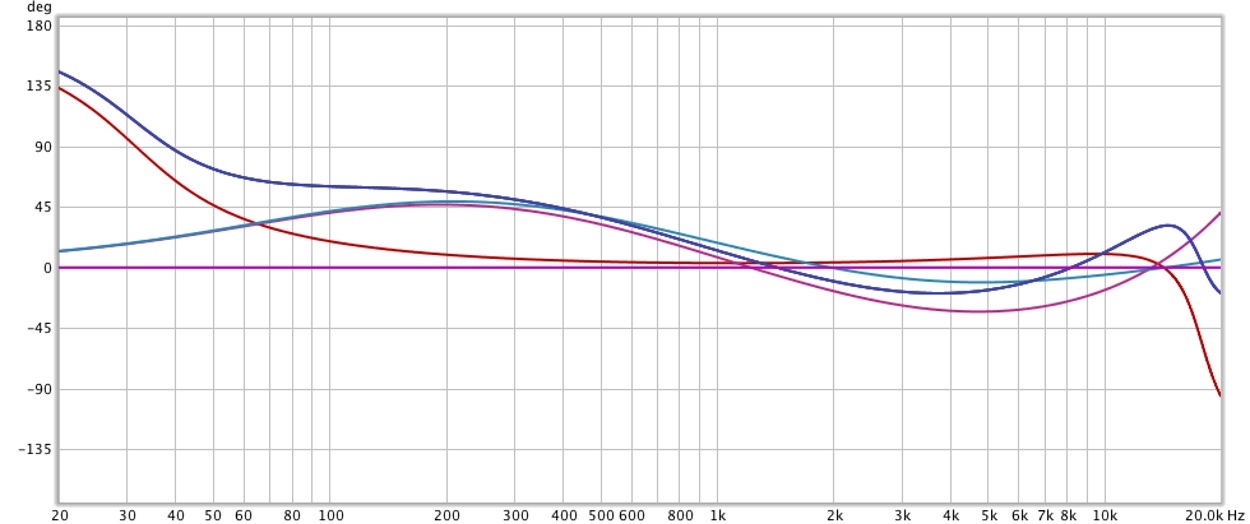
In a recent post about Mixbus 32c's mixer I discussed some 'issues' with the EQ. I've since discussed this issue with a number of people, including engineers at Harrison.
So the purpose of this post is to clarify some things, correct a potential error, and help you understand (at a very basic level) how and why digital EQs differ.
This doesn't cover EVERYTHING, just one specific difference between EQs in the context of this discussion.
Let's get on with it!
Wood cutting macro photographs
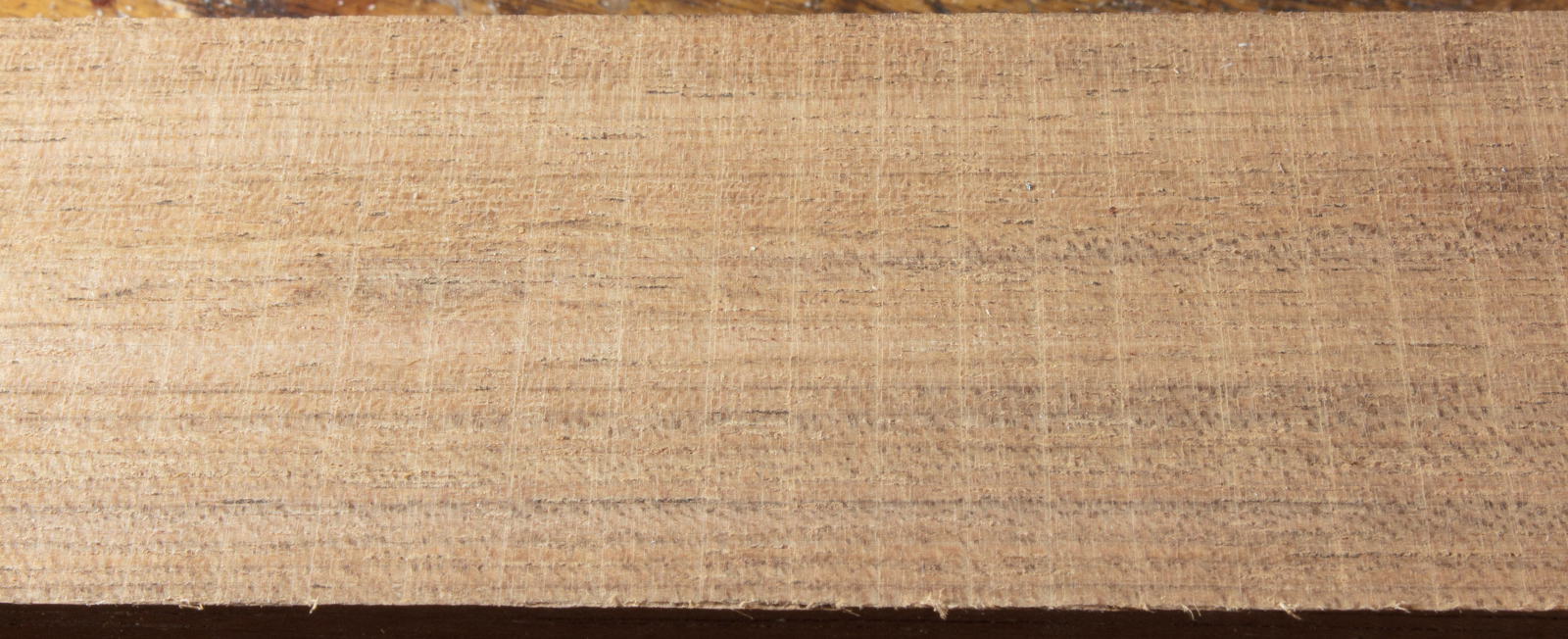
Recently I came in to possession of a Laguna Resaw King bandsaw blade. I heard that it leaves tablesaw-like quality cuts, and would be superior to my Spectrum Supply KerfMaster or Highland Woodslicer.
So to test this, I took a piece of Jatoba which is a wood I use very often, and rip cut it on the same Grizzly G0555X with a riser block with various blades. I timed myself to try and keep the feed rate identical. From there I also prepared samples with low, medium and high angle blade setups in my Veritas bevel-up smoother, my tablesaw with a Dewalt DW7140PT blade, and both sides of a Gyokucho Ryoba for hardwoods.
From there I took macro photographs of each sample in the same lighting. I used a Canon 600d with a EF-S 18-55mm f/3.5-5.6 IS on a Reversing Ring. The angle of some photos is changed slightly to help accentuate certain details. You may notice a large variation in colour across the photos, but that is representative of the changes in the wood itself as a result of the preparation method! The frame size is ~4mm.
I've organized the images in order from what I feel is worst quality finish to best.
Let's get on to it...
Mixbus 32c - The Mixer
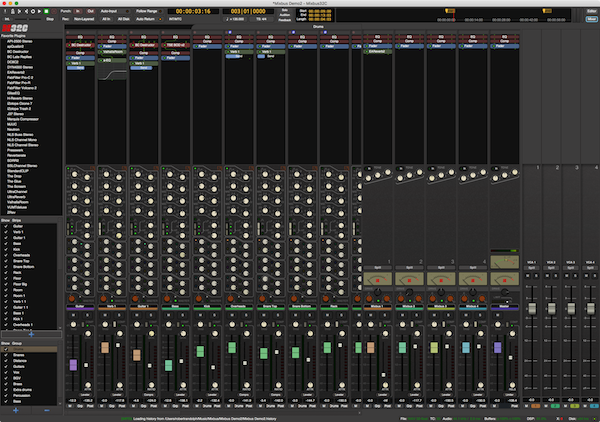
Mixbus is often seen as a program that, after doing all of your work in another DAW, you drop in stems and mix with. I don't think that this is necessarily the best use of Mixbus, since it's a fantastic full-fledged DAW in its own right, however it is one of the best aspects of Mixbus.
The mixer in mixbus is not your typical digital summing box. Each channel has a selection of features that optionally can be sent to a mixbus with a number of features that goes to a master bus with a number of features which can optionally go through a monitoring section with a number of features.
Let's just dive in and go through what the Mixbus 32c mixer offers.
Cool things in Mixbus part 4
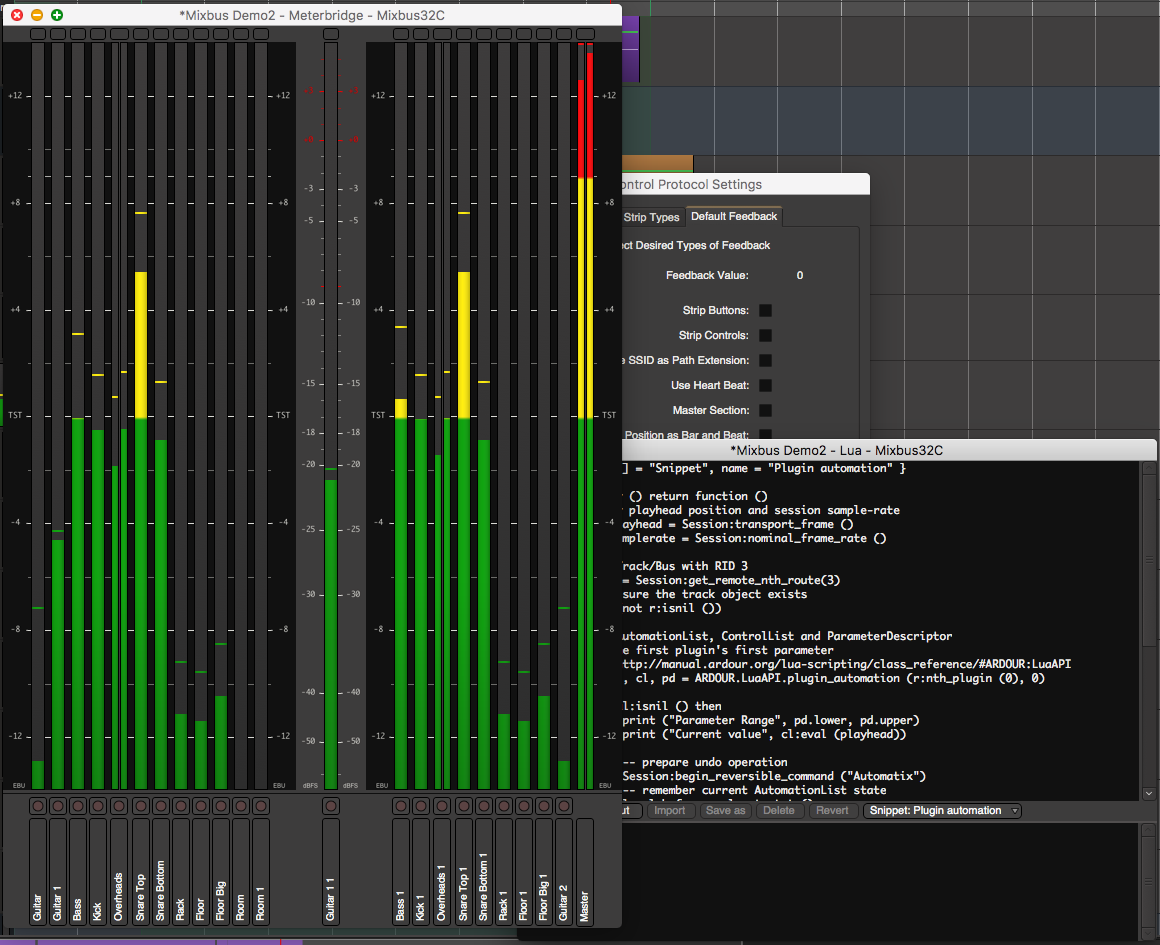
This time in Mixbus we're covering some workflow enhancers that are rarely found in other products.
- Meter Bridge
- OSC
- Scripting
Cool things in Mixbus Part 3
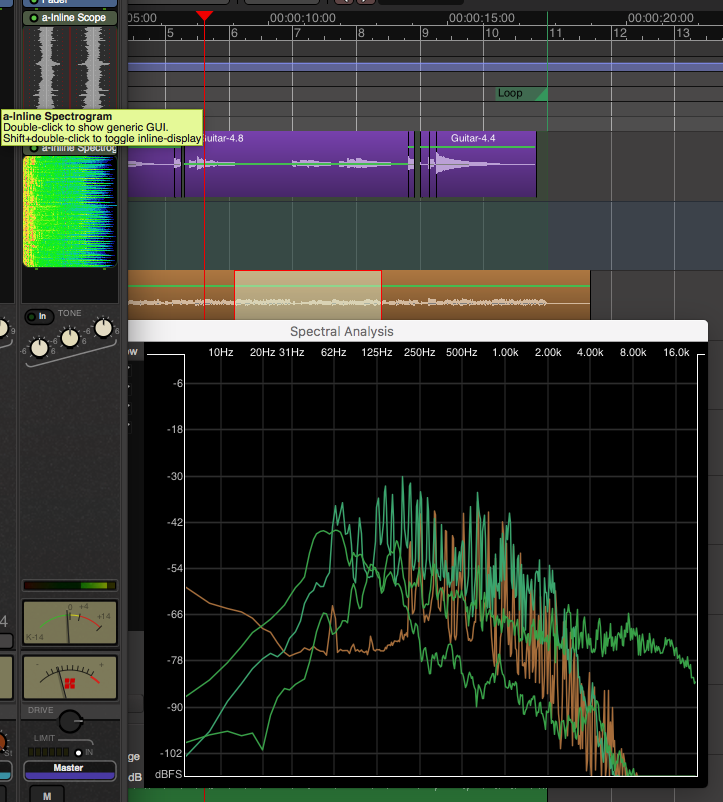
This time I'm covering some quality of life improvements that Mixbus offers. Seemingly little things that make day-to-day studio life much easier.
None of these are really ground-breaking features, but they can easily save you hours a week... and probably some stress too.
- Spectral Analysis
- Inline scopes
- Basic Editing
- Automatic Range Editing